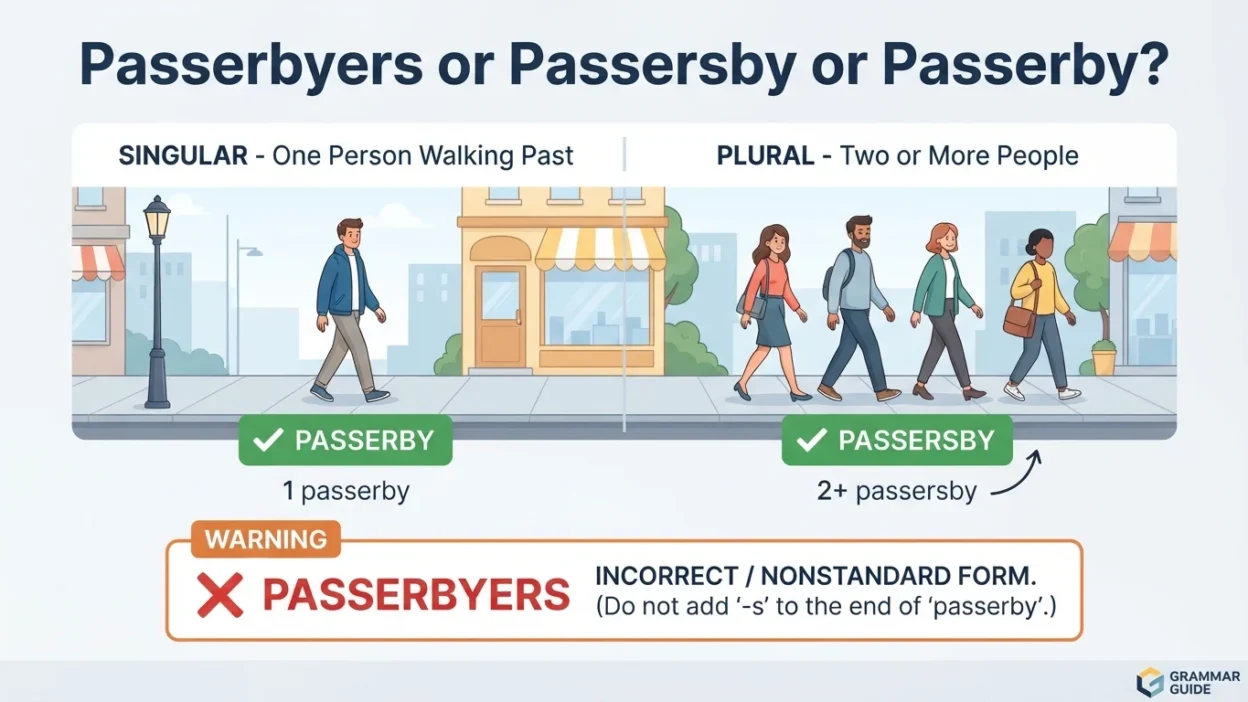
In everyday English, choosing between passerbyers or passersby or passerby can be tricky because these forms sound alike but follow irregular plural forms. The case of Passerbyers, Passersby, and Passerby often confuses learners, and I have seen people feel hesitated when writing or saying the phrase, especially when alone and unsure about the correct grammar and proper usage. The example is simple once you understand that passerby refers to one person, while passersby refers to more than one.
The plural form is essential for speaking and writing clearly, but the debate often sparks confusion among learners trying to master English. Passerby is the standard singular form, and passersby is the standard plural, whereas passerbyers is a common mistake rather than the usual plural. Understanding these rules and variations makes it easier to avoid mistakes and use each form naturally.
Quick Answer: Passerbyers or Passersby or Passerby?
Passerby is the singular form, and passersby is the standard plural form. Passerbyers is not the standard plural and should normally be avoided.
- One person: a passerby
- Two or more people: passersby
- Incorrect standard plural: passerbyers
Example:
A passerby helped the injured cyclist.
Several passersby stopped to watch.
The key is that the plural -s is added to passer, not to the entire word. Therefore, passersby is correct.
What Does “Passerby” Mean?
A passerby is a person who happens to be walking or traveling past a particular place. The person is usually not directly involved in the event being described.
For example:
A passerby noticed the lost wallet.
The person was simply passing by when they noticed the wallet.
The word can be used in many everyday situations:
- A passerby called for help.
- A passerby saw the accident.
- The shop caught the attention of a passerby.
- A passerby stopped to answer my question.
The word is especially useful when you do not know the person’s name or relationship to the situation.
What Is the Plural of Passerby?
The standard plural of passerby is passersby.
This may look unusual, but it follows the structure of the compound word. Passerby consists of passer + by, and the plural ending is attached to the main noun element, passer.
So:
passer + by → passerby
passers + by → passersby
This is similar to other compound nouns in English where the main noun changes to show plurality.
For example:
- passerby → passersby
- mother-in-law → mothers-in-law
- editor-in-chief → editors-in-chief
Understanding this pattern can make the spelling easier to remember.
Passerby vs Passersby
The difference between passerby and passersby is simply number.
Passerby refers to one person.
A passerby gave me directions.
Passersby refers to more than one person.
Several passersby gathered outside the building.
You can usually identify which form you need by looking at the number of people being discussed.
| Form | Number | Meaning | Example |
| passerby | Singular | One person passing by | A passerby helped us. |
| passersby | Plural | More than one person passing by | Several passersby helped us. |
| passerbyers | Nonstandard | Usually intended as the plural | Avoid in standard English. |
Why Is “Passerbyers” Incorrect?
The form passerbyers is usually created by treating passerby as if it were an ordinary noun that takes -ers or another plural ending.
However, passerby already contains the word passer, which means a person who passes. Adding -ers to the whole compound produces an unnecessary and nonstandard form.
Think of it this way:
passerby → passersby
Not:
passerby → passerbyers
The second form may occasionally appear in informal writing or online discussions, but it is not the standard plural used in careful English.
If you are writing an article, school assignment, business email, report, or formal document, choose passersby.
Passerbyers or Passersby: Common Examples
Seeing the correct form in context is one of the easiest ways to remember it.
Singular Examples
Use passerby when referring to one person:
- A passerby noticed the broken window.
- The passerby called the police.
- One passerby offered assistance.
- A passerby found the missing phone.
- The injured man was helped by a passerby.
Plural Examples
Use passersby when referring to several people:
- Several passersby stopped to help.
- The passersby watched the performance.
- Many passersby noticed the unusual display.
- A group of passersby gathered near the entrance.
- The noise attracted several passersby.
Notice how the meaning changes according to whether you are talking about one person or multiple people.
Common Mistakes to Avoid
The unusual plural form makes this word a frequent source of spelling and grammar mistakes.
Mistake 1: Using “Passerbyers”
❌ Several passerbyers stopped to help.
✅ Several passersby stopped to help.
Passerbyers is not the standard plural.
Mistake 2: Using “Passerby” for Multiple People
❌ Several passerby stopped outside.
✅ Several passersby stopped outside.
Because several indicates more than one person, the plural passersby is required.
Mistake 3: Writing “Passers-bys”
❌ Several passers-bys watched the event.
✅ Several passersby watched the event.
The standard plural is written as one word: passersby.
Mistake 4: Adding a Regular “S” to the End
❌ Two passerbys were standing nearby.
✅ Two passersby were standing nearby.
The plural marker belongs to passer, so the correct spelling is passersby, not passerbys.
Is “Passerby” One Word or Two?
In modern standard English, passerby is normally written as one word.
Correct:
A passerby stopped to help.
Not:
A passer by stopped to help.
You may occasionally encounter variations in older texts or informal usage, but passerby is the standard form most readers will expect.
Likewise, its plural is normally written as one word:
Several passersby stopped.
This makes passerby and passersby easy to recognize once you become familiar with them.
American vs British English
There is no major difference between American and British English when it comes to the standard forms passerby and passersby.
Both varieties generally use:
- passerby for one person
- passersby for more than one person
For example:
American English:
A passerby called for help.
British English:
A passerby called for help.
The plural also remains the same:
Several passersby stopped.
Therefore, you do not need to change the spelling based on whether you are writing for an American or British audience.
The confusion around passerbyers is not an American-versus-British spelling difference. It is primarily a question of standard versus nonstandard usage.
How to Remember the Plural of Passerby
A simple trick is to focus on the word passer.
A passer is the person who passes by.
When there is more than one:
passer → passers
Then add by:
passers + by = passersby
You can remember the pattern with this short formula:
One passerby → two passersby
This approach is more useful than simply memorizing the spelling because it explains why the plural changes where it does.
Is “Passersby” Always Correct?
For standard English, passersby is the usual plural form of passerby.
However, context can sometimes affect how natural the word sounds. In some sentences, you might prefer alternatives such as:
- pedestrians
- people passing by
- people nearby
- bystanders
- people walking past
These words are not always exact synonyms, though.
For example, a bystander is generally someone who is present and witnesses an event, while a passerby specifically suggests someone who happens to be passing the location.
So choose the word that best matches the situation.
FAQs
Is “passerbyers” correct?
No. Passerbyers is not the standard plural of passerby. In standard English, use passersby for more than one person.
What is the plural of passerby?
The plural of passerby is passersby.
One passerby noticed the problem.
Several passersby noticed the problem.
Is passerby one word?
Yes. Passerby is normally written as one word in standard modern English.
Is passersby one word?
Yes. Passersby is normally written as one word and is the standard plural of passerby.
Can I say “passerbys”?
No, not in standard English. The correct plural is passersby, with the plural -s attached to passer.
Is passerby American or British English?
Passerby is used in both American and British English. The standard plural passersby is also used in both varieties.
What is the difference between a passerby and a bystander?
A passerby is someone who happens to be passing a place. A bystander is someone who is present and observes an event. The terms can overlap in some situations, but they are not always interchangeable.
How do you remember passersby?
Remember that the plural changes passer into passers:
passerby → passersby
This helps you avoid forms such as passerbyers, passerbys, and passers-bys.
Summary
The correct choice among passerbyers or passersby or passerby depends on whether you mean one person or more than one. Passerby is the singular form for one person who happens to be passing by, while passersby is the standard plural for two or more people. Passerbyers is not the standard plural and should generally be avoided in formal and everyday standard English.
The unusual plural can seem confusing because English often adds -s to the end of nouns. In this case, however, the plural ending is added to passer, giving us passersby. This rule is the same in both American and British English, so you can confidently use passerby for one person and passersby for multiple people.
Actionable Takeaway
When writing about one person, use passerby. When writing about multiple people, use passersby. Avoid passerbyers, passerbys, and passers-bys in standard English.
Easy rule: 1 passerby → 2 or more passersby.