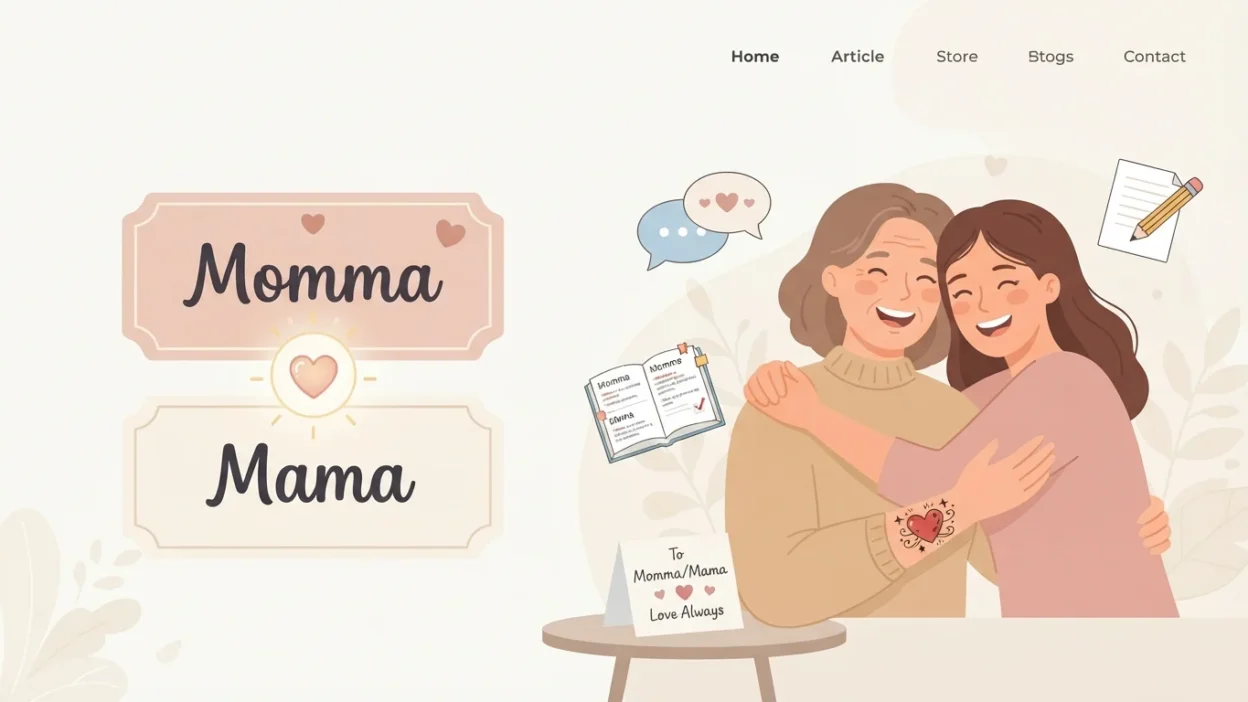
Momma or mama depends on personal preference, family tradition, and the emotional connection you want your words or tattoo to express best.
Choosing between momma or mama often comes down to personal preference and family tradition. If you’re planning a tattoo for your mom, a traditional design with a heart can carry deep meaning. Many people prefer momma’s boy, while others like mama’s boy because it sounds softer and more informal. From my experience with language and regional usage, both expressions have positive connotations, and neither spelling is universally correct.
If someone suggested one version originally, spend time thinking about the sentiment instead of focusing only on the style. For example, a trans guy with a loving mother who is supportive may feel that either phrase reflects a meaningful personal connection. If you’re wondering which one you should choose, seeking insight from others can help, but the final decision should reflect what feels most meaningful.
Many people are happy to find a helpful sub, enjoy reading different opinions, and simply say thank you for the shared advice. In the end, the wording, love, and respect behind the tattoo matter far more than choosing one spelling over the other.
Quick Answer
Both momma and mama are correct spellings. Neither is grammatically superior. The choice usually depends on personal preference, family tradition, regional speech, or the emotional tone you want to express. Mama is more widely recognized around the world, while momma is especially common in parts of the Southern United States and informal American English.
What Do “Momma” and “Mama” Mean?
Both words are affectionate ways to refer to one’s mother.
Children often use these terms naturally before learning the more formal word mother. As people grow older, many continue using momma or mama because the words carry warmth, comfort, and emotional connection.
Although they have the same basic meaning, the feeling behind each word can vary slightly depending on culture and family traditions.
Is “Momma” or “Mama” More Correct?
Neither spelling is universally more correct.
Both appear in spoken English, literature, music, movies, and everyday conversation. Dictionaries recognize mama, while momma is generally considered an informal spelling that reflects pronunciation in many English-speaking communities.
The best choice depends on how your family naturally speaks.
The Difference Between Momma and Mama
While both words refer to a mother, there are subtle differences.
| Momma | Mama |
| More common in Southern American English | Common worldwide |
| Very informal | Informal but widely accepted |
| Often reflects regional pronunciation | Standard affectionate spelling |
| Frequently seen in country music and Southern culture | Common in books, films, and daily conversation |
| Personal and family-oriented | Universal and recognizable |
Neither version changes the meaning. The difference is mainly style and regional preference.
When Should You Use “Momma”?
Choose momma if:
- Your family naturally says “momma.”
- You’re reflecting Southern American speech.
- You want a warm, rustic, or personal tone.
- You’re writing dialogue that matches a character’s voice.
- You’re creating a meaningful tattoo based on family language.
Examples:
- I love you, Momma.
- Momma always knows best.
- Thanks for everything, Momma.
When Should You Use “Mama”?
Choose mama if:
- That’s what you’ve always called your mother.
- You want a spelling recognized internationally.
- You’re writing for a broad audience.
- You’re creating a greeting card or keepsake.
- You’re following family tradition.
Examples:
- Mama always believed in me.
- I miss you, Mama.
- Thank you, Mama, for your endless support.
Which One Is Better for a Tattoo?
Many people searching momma or mama are choosing wording for a tattoo.
There isn’t a right or wrong answer.
Instead, ask yourself:
- Which word did you actually use growing up?
- Which spelling feels more emotional?
- Which version reflects your mother’s personality?
- Which one has greater personal meaning?
If your mother always signed cards with “Mama,” that version may feel more authentic. If everyone in your family says “Momma,” then that spelling will likely feel more meaningful.
A tattoo is deeply personal, so authenticity matters more than following trends.
Common Expressions
You’ll often hear both spellings in everyday English.
Momma
- Momma’s boy
- Momma knows best
- Love you, Momma
- Momma bear
Mama
- Mama’s boy
- Mama bear
- Mama said
- Dear Mama
Both versions sound natural when they match the speaker’s background and family culture.
Common Mistakes to Avoid
Although both spellings are correct, these mistakes are common.
Assuming One Is Wrong
Many people think only mama is correct.
Actually, both are accepted depending on context.
Changing Family Tradition
If your family has always said momma, don’t switch to mama simply because it appears more often online.
Authenticity matters.
Using Formal Grammar Rules
These words are affectionate nicknames, not strict grammatical terms.
Focus on emotional meaning instead.
Mixing Spellings
If you’re writing a card, article, or tattoo design, stay consistent.
Choose one spelling and use it throughout.
Momma’s Boy vs Mama’s Boy
Both phrases describe someone who has a very close relationship with their mother.
Neither spelling changes the meaning.
The difference is mostly regional and stylistic.
Examples:
- He’s a proud Momma’s boy.
- He’s always been Mama’s boy.
The version that feels most natural usually depends on family background.
American vs British English
There is no official American versus British grammar rule for momma and mama.
However, there are some usage patterns.
American English
- Mom
- Mommy
- Mama
- Momma (especially Southern regions)
British English
- Mum
- Mummy
British English generally uses mum more often than mom, mama, or momma.
Even so, readers in both countries understand the meanings of momma and mama without difficulty.
Similar Words
Depending on your culture or family, you may also hear:
- Mom
- Mother
- Mommy
- Mum
- Mummy
- Ma
- Mommy dearest
- Mama bear
- Momma bear
Each term reflects a different level of affection, culture, or regional speech.
Tips for Choosing Between Momma and Mama
If you’re still unsure, consider these questions.
- Which word did you say as a child?
- Which version does your family still use?
- Which spelling feels more personal?
- Is your audience international?
- Does one version better match your memories?
Your emotional connection is more important than popularity.
FAQs
Is “momma” a real word?
Yes. Momma is a recognized informal spelling used by millions of English speakers, especially in the United States.
Is “mama” more correct than “momma”?
No. Both spellings are correct. The choice depends on personal preference and regional usage.
Which spelling is better for a tattoo?
Use the spelling that reflects your real relationship with your mother. Personal meaning matters more than grammar.
Is “momma” only used in the Southern United States?
It is especially common there, but many people across North America also use it.
Which spelling appears more often worldwide?
Mama is generally more common internationally.
Do dictionaries include “momma”?
Many dictionaries list momma as an informal variant of mama.
Can I use both spellings in the same document?
It’s better to stay consistent unless you’re intentionally comparing the two words.
Summary
When comparing momma or mama, there isn’t a universally correct choice. Both words are affectionate ways to refer to a mother, and both are accepted in everyday English. The difference lies mainly in regional speech, family tradition, and the emotional tone you want to convey. Mama is more universally recognized, while momma often reflects Southern American English and a more personal, conversational style.
The best spelling is the one that feels authentic to your relationship. Whether you’re writing a heartfelt message, designing a tattoo, or simply choosing the right word for a story, let your memories and family traditions guide your decision. The love behind the word will always matter more than the spelling itself.