If you have ever wondered about tear vs tare, you are not alone. These two words look and sound similar in some contexts, but they have completely different meanings and uses. One can refer to ripping something or a drop of liquid from your eye, while the other is mainly used when discussing the weight of a container or packaging.
The confusion becomes even greater because tear has more than one pronunciation and meaning. Understanding the difference between tear and tare can help you avoid spelling mistakes in everyday writing, professional communication, measurements, and technical contexts. Let’s make the distinction simple and memorable.
Quick Answer: Tear vs Tare
Tear and tare are different words with different meanings.
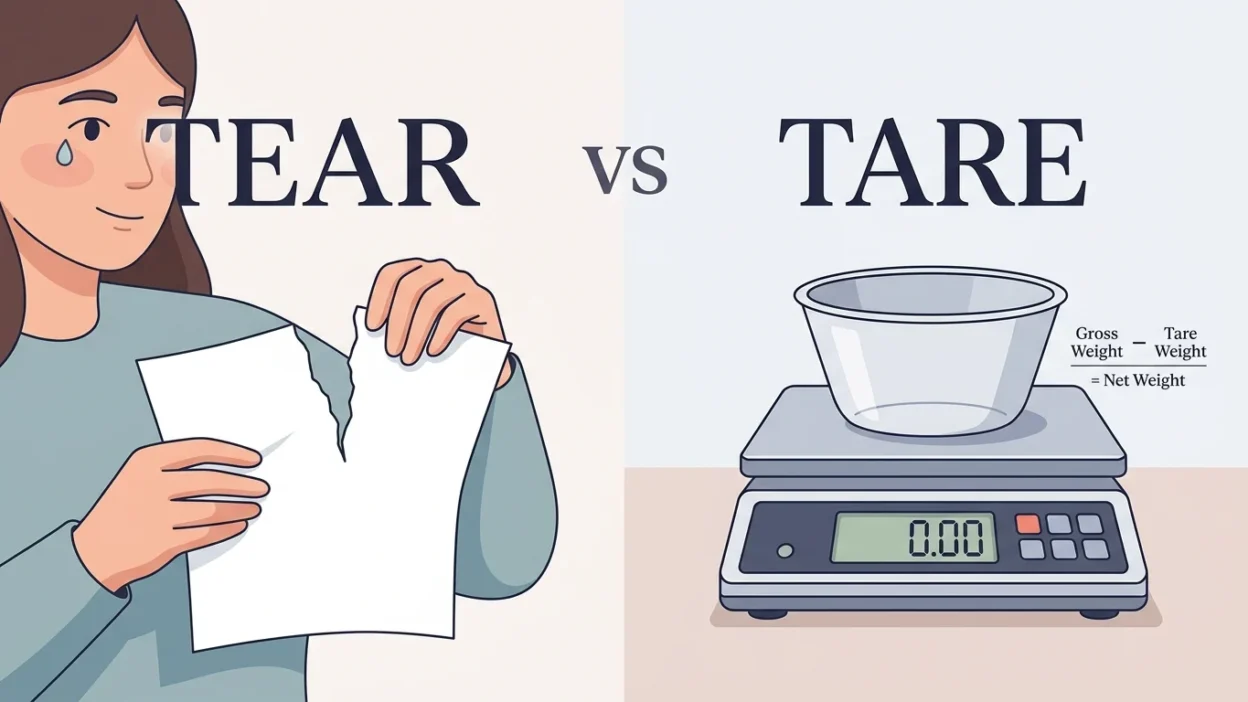
- Tear can mean to rip or pull something apart, or a drop of fluid produced by the eye.
- Tare refers to the weight of an empty container or packaging, especially when calculating net weight.
- Tear is a common everyday word.
- Tare is more common in shipping, weighing, cooking, manufacturing, science, and commerce.
Easy memory trick:
Tear = rip or eye water
Tare = container weight
What Does “Tear” Mean?
The word tear has two main meanings, and they are pronounced differently.
Tear meaning “to rip”
When tear means to rip, damage, or pull something apart, it is pronounced like “tair.”
For example:
- Please tear the paper into small pieces.
- I accidentally tore my shirt.
- Be careful not to tear the envelope.
- The strong wind may tear the flag.
As a verb, tear describes the action of pulling or ripping something apart.
Its common forms include:
- Tear — present tense
- Tore — simple past
- Torn — past participle
- Tearing — present participle
For example:
She tore the letter into pieces.
He has torn his jacket.
Tear meaning “a drop from the eye”
Tear can also mean a small drop of liquid that comes from your eye. In this meaning, it is pronounced like “teer.”
Examples include:
- A tear rolled down her cheek.
- His eyes filled with tears.
- She wiped away a tear.
- The emotional speech brought tears to his eyes.
This meaning is associated with emotions, crying, sadness, happiness, pain, or irritation.
Why does “tear” have two pronunciations?
This is one reason tear can be confusing. English uses the same spelling for two different words:
- Tear /ter/ or /tɛr/ = rip
- Tear /tɪr/ = drop from the eye
The pronunciation depends on the meaning.
What Does “Tare” Mean?
Tare is a specialized word that usually relates to weight and measurement.
The tare weight is the weight of an empty container, package, vehicle, or other item that holds something being weighed.
For example, imagine a box containing 10 kilograms of rice.
If the rice and box together weigh 10.5 kg, and the empty box weighs 0.5 kg, then:
Gross weight = 10.5 kg
Tare weight = 0.5 kg
Net weight = 10 kg
So, tare helps you determine the actual weight of the contents.
Examples of “tare”
- The tare weight of the container is 500 grams.
- Set the scale to tare before adding the ingredients.
- The machine automatically calculates the tare.
- The package has a tare weight of 200 grams.
- We need to subtract the tare weight from the gross weight.
The word is particularly useful in shipping, logistics, retail, manufacturing, laboratories, kitchens, and weighing systems.
Tare on a Digital Kitchen Scale
You may have encountered tare without realizing it.
Many digital kitchen scales have a TARE button. Pressing this button resets the scale to zero after you place an empty bowl or container on it.
For example:
- Place an empty bowl on the scale.
- The scale displays 300 grams.
- Press TARE.
- The display returns to zero.
- Add flour.
- The scale now shows only the weight of the flour.
This makes tare especially useful when measuring ingredients.
Tear vs Tare: Comparison Table
| Word | Meaning | Pronunciation | Common Use | Example |
| Tear | To rip or pull apart | “tair” | Everyday writing | Don’t tear the paper. |
| Tear | A drop from the eye | “teer” | Emotions, crying | A tear fell from her eye. |
| Tare | Weight of an empty container | “tair” | Weighing and measurement | The tare weight is 500 g. |
| Tare | To reset a scale to zero | “tair” | Kitchen and digital scales | Tare the scale before measuring. |
Tear vs Tare Pronunciation
Pronunciation is an important part of understanding these words.
Tear meaning “rip” and tare generally sound alike:
tear = “tair”
tare = “tair”
But tear meaning a drop from the eye sounds different:
tear = “teer”
So you might hear:
- “Please tear the paper.” → “tair”
- “She shed a tear.” → “teer”
- “Check the tare weight.” → “tair”
Context usually tells you which meaning is intended.
Common Mistakes with Tear and Tare
Because tear and tare can sound identical, especially when pronounced “tair,” spelling mistakes are easy to make.
Mistake 1: Using “tare” for ripping
Incorrect:
Please tare the paper.
Correct:
Please tear the paper.
When you mean rip, split, or pull apart, use tear.
Mistake 2: Using “tear” for container weight
Incorrect:
What is the tear weight of this package?
Correct:
What is the tare weight of this package?
When discussing the weight of an empty container or packaging, use tare.
Mistake 3: Confusing “tear” with “tears”
Remember that tear can mean a drop from the eye.
For example:
A tear rolled down his face.
The plural is:
Tears filled her eyes.
But if you are talking about ripping something, the verb remains tear:
Be careful not to tear the page.
How to Remember Tear vs Tare
A simple memory trick can make these words much easier.
Tear = rip or eye
Think:
Tear → tear apart
Or:
Tear → tears from your eyes
Tare = scale or container
Think:
Tare → table scale
When you see tare, think about weight, packaging, containers, and scales.
Another useful formula is:
Gross weight − Tare weight = Net weight
This is a common concept in shipping, packaging, and measurement.
Tear vs Tare in Everyday English
You will encounter tear much more often in general English.
Common phrases include:
- tear a piece of paper
- tear a page
- tear a shirt
- tear apart
- tear down
- tear up
- shed a tear
- tears of joy
- tears of sadness
Tare, on the other hand, is more specialized.
You are more likely to see it in:
- product packaging
- weighing scales
- shipping documents
- warehouses
- laboratories
- supermarkets
- manufacturing
- cooking and baking
- scientific measurements
Knowing this difference can improve both your vocabulary and your spelling accuracy.
American vs British English: Tear vs Tare
There is no major American-versus-British spelling difference between tear and tare.
Both American English and British English use:
- tear for ripping
- tear for fluid from the eye
- tare for the weight of an empty container
The pronunciation of tear still changes according to its meaning in both varieties of English.
The word tare is also used in both American and British English, particularly in technical and measurement-related contexts.
Are Tear and Tare Homophones?
Tear and tare can be homophones when tear means “to rip.”
For example:
- tear = to rip
- tare = container weight
Both are commonly pronounced “tair.”
However, tear meaning a drop from the eye is pronounced differently, so it is not a homophone of tare in that meaning.
This is an excellent example of why English spelling can be challenging: words that sound the same may have completely unrelated meanings and spellings.
FAQs
Is “tare” the same as “tear”?
No. Tare refers mainly to the weight of an empty container or the function of resetting a scale. Tear can mean to rip something or a drop from the eye.
Is tare pronounced like tear?
Yes, when tear means “to rip,” tare and tear are generally pronounced alike, like “tair.” However, tear meaning a drop from the eye is pronounced “teer.”
What is tare weight?
Tare weight is the weight of an empty container, package, vehicle, or other item before its contents are included.
What does tare mean on a weighing scale?
On a weighing scale, tare means to reset the displayed weight to zero, allowing you to measure only the contents placed in the container.
Is “tear” the correct word for ripping?
Yes. Tear is the correct spelling when you mean to rip, split, or pull something apart.
Is “tear weight” correct?
Usually, no. If you mean the weight of an empty container or package, the correct term is tare weight.
Are tear and tare homophones?
They can be. Tear, meaning “to rip,” and tare are normally pronounced the same. Tear, meaning a drop from the eye, has a different pronunciation.
How can I easily remember tear and tare?
Remember tear = rip or eye and tare = scale or container weight. The phrase gross weight − tare weight = net weight can also help you remember the measurement meaning.
Summary
The difference between tear vs tare becomes simple once you connect each word with its main meaning. Tear can mean to rip or pull something apart, as in “tear the paper,” or it can mean a drop of liquid from the eye, as in “a tear rolled down her cheek.” The pronunciation changes depending on which meaning is intended.
Tare is primarily associated with weight and measurement. It describes the weight of an empty container or packaging and is also used as a command on digital scales to return the display to zero. Although tear and tare can sound identical when tear means “rip,” their meanings and spellings are different.
Actionable Takeaway
When you mean rip something, choose tear. When you mean a drop from the eye, choose tear again, but remember its different pronunciation. When you are talking about an empty container, packaging, or resetting a weighing scale, choose tare.
A quick rule to remember is:
Tear = rip or eye
Tare = weight or scale
Keep this distinction in mind, and you will be able to use tear vs tare confidently in everyday writing, professional communication, and technical contexts.