Have you ever stopped while writing and wondered whether to bad or too bad is correct? It’s a common mistake because both words sound alike, but only one is grammatically correct in this expression. Understanding the difference can instantly improve your writing and help you avoid embarrassing errors.
In this guide, you’ll learn the meaning of too bad, why to bad is usually incorrect, real-life examples, common grammar mistakes, and simple tips to remember the correct form. Whether you’re writing emails, school assignments, social media posts, or professional documents, this article will help you use the phrase confidently.
Quick Answer
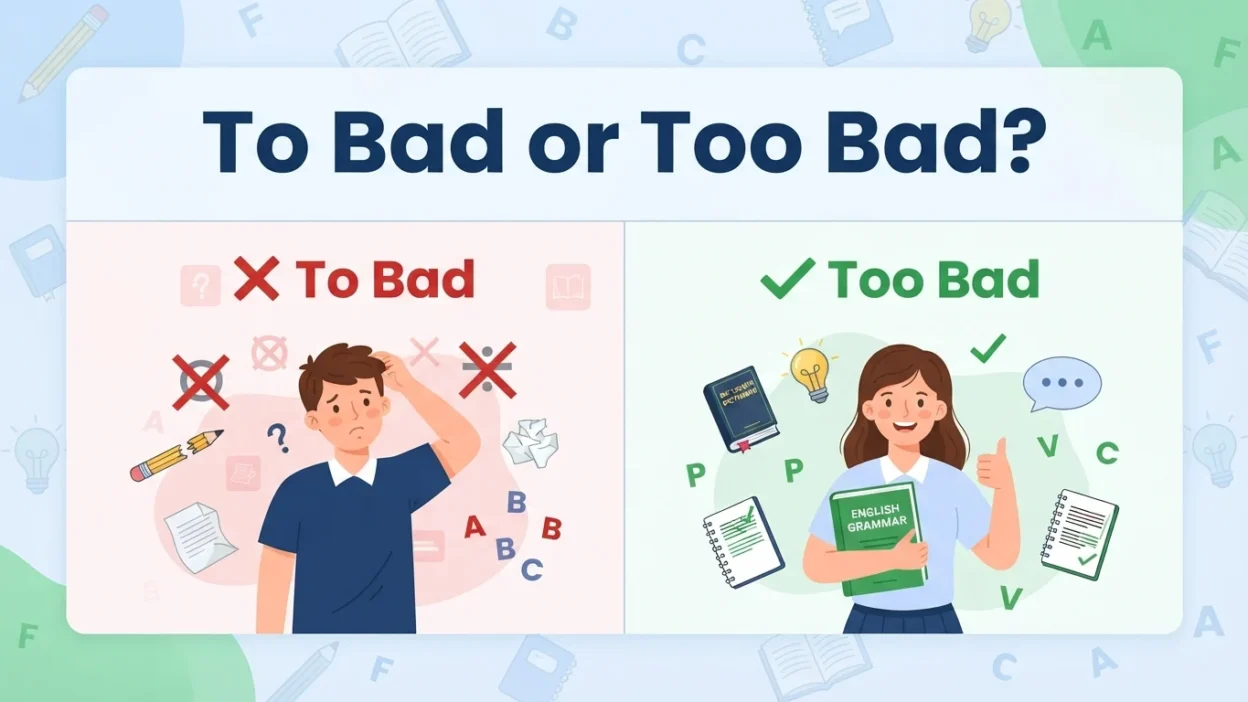
“Too bad” is the correct phrase in almost every situation.
- ✅ Too bad = means unfortunate, disappointing, or regrettable.
- ❌ To bad = almost always incorrect because to is a preposition or part of an infinitive, not an adverb meaning “excessively.”
Example:
- ✅ It’s too bad you couldn’t come.
- ❌ It’s to bad you couldn’t come.
What Does “Too Bad” Mean?
The phrase too bad expresses disappointment, sympathy, regret, or something unfortunate. It is commonly used in everyday English conversations and writing.
The word too has several meanings:
- Also
- More than necessary
- Excessively
In the expression too bad, too means excessively or emphasizes that something is unfortunate.
Examples
- It’s too bad the concert was canceled.
- That’s too bad you missed the interview.
- It’s too bad we couldn’t meet this weekend.
- The weather was too bad for hiking.
- It’s too bad they closed the restaurant.
In all these examples, the speaker expresses regret or disappointment.
Why Is “To Bad” Incorrect?
The word to serves different grammatical purposes.
It can function as:
- A preposition
- Part of an infinitive verb
It does not mean “also” or “excessively.”
Therefore, writing to bad instead of too bad is simply a spelling mistake in almost every case.
Incorrect Examples
- ❌ It’s to bad you left early.
- ❌ That’s to bad.
- ❌ To bad we missed the train.
Correct Versions
- ✅ It’s too bad you left early.
- ✅ That’s too bad.
- ✅ Too bad we missed the train.
To vs Too: Understanding the Difference
Many English learners confuse these words because they are pronounced the same.
| Word | Meaning | Example |
| To | Shows direction, purpose, or forms an infinitive | I went to school. |
| Too | Means also or excessively | It’s too cold outside. |
Since too bad expresses emphasis or excess, too is always the correct choice.
To Bad or Too Bad: Side-by-Side Comparison
| Feature | To Bad | Too Bad |
| Correct English | ❌ No | ✅ Yes |
| Expresses disappointment | ❌ No | ✅ Yes |
| Common in everyday speech | ❌ No | ✅ Yes |
| Accepted in formal writing | ❌ No | ✅ Yes |
| Dictionary phrase | ❌ No | ✅ Yes |
When Should You Use “Too Bad”?
Use too bad whenever you want to express sympathy, disappointment, or regret.
Examples in Daily Conversation
- That’s too bad about your exam.
- It’s too bad you couldn’t join us.
- Too bad the movie sold out.
- It’s too bad they canceled the flight.
- That’s too bad, but maybe next time.
These examples sound natural and are widely accepted in both spoken and written English.
Can “To Bad” Ever Be Correct?
Technically, to bad may appear if to belongs to another part of the sentence.
For example:
- We went to Bad Ischl in Austria.
- They traveled to Bad Nauheim.
Here, Bad is part of a proper place name, not the adjective bad.
Outside of proper nouns, to bad is generally considered an error.
Common Mistakes People Make
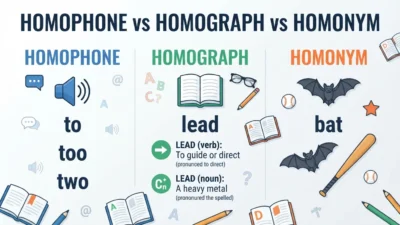
Many writers type to bad because English contains many homophones.
Here are some similar mistakes:
- Your vs You’re
- Their vs There vs They’re
- Its vs It’s
- Than vs Then
- Accept vs Except
- To vs Too vs Two
Learning the role of each word helps eliminate these mistakes.
Easy Trick to Remember
A simple memory tip:
If you can replace too with very or extremely, then too is correct.
Example:
It’s too bad.
Think:
It’s very unfortunate.
That works perfectly.
Now try:
It’s to bad.
This makes no grammatical sense.
So remember:
Too = extra, excessive, also.
To = direction or infinitive.
Examples in Different Situations
Casual Conversation
- That’s too bad.
- It’s too bad you couldn’t stay longer.
- Too bad the store closed early.
Workplace
- It’s too bad the meeting had to be postponed.
- That’s too bad, but we’ll reschedule.
- It’s too bad the proposal wasn’t approved.
School
- It’s too bad you missed the lecture.
- That’s too bad about your grades.
- It’s too bad the library was closed.
Social Media
- Too bad I forgot my camera.
- It’s too bad the vacation ended.
- Too bad the event was canceled.
Common Grammar Rules
Keep these grammar rules in mind:
- Too modifies adjectives and adverbs.
- Bad is an adjective.
- Therefore, too bad is grammatically correct.
- To never modifies adjectives this way.
This is why grammar guides consistently recommend too bad.
American vs British English
There is no difference between American English and British English regarding this phrase.
Both varieties use:
- ✅ Too bad
Neither variety accepts to bad as standard English.
The spelling, meaning, pronunciation, and usage remain exactly the same across both forms of English.
Related Words
To better understand this topic, here are closely related words and phrases:
- too vs to
- grammar mistakes
- English spelling
- common English errors
- homophones
- correct grammar
- writing tips
- English usage
- punctuation
- sentence examples
- grammar checker
- proper spelling
- language learning
- English vocabulary
- confusing words
- proofreading
- correct word choice
- writing skills
These related terms help reinforce the concept and improve your overall English proficiency.
Tips to Avoid This Mistake
Follow these simple strategies:
- Read your sentence aloud.
- Remember that too means also or excessively.
- Proofread before publishing.
- Use grammar-checking tools.
- Practice common homophones regularly.
- Learn phrases instead of isolated words.
With enough practice, choosing too bad becomes automatic.
FAQs
Is “to bad” ever grammatically correct?
Generally, no. It is almost always a spelling mistake. The only exception is when Bad is part of a proper noun, such as a place name.
Which is correct: “to bad” or “too bad”?
Too bad is the correct phrase for expressing disappointment or regret.
Why do people confuse “to” and “too”?
They are homophones, meaning they sound the same but have different meanings and grammatical functions.
Can I use “too bad” in formal writing?
Yes. It is perfectly acceptable in both formal and informal English when expressing regret or disappointment.
Does “too bad” mean the same as “unfortunate”?
Yes. In many contexts, too bad means something is unfortunate, disappointing, or regrettable.
Is there a British spelling of “too bad”?
No. Both American and British English use too bad with the same spelling and meaning.
What part of speech is “too”?
In this phrase, too is an adverb modifying the adjective bad.
Summary
If you’ve been wondering whether to write to bad or too bad, the answer is simple: too bad is the correct expression. It conveys disappointment, regret, or sympathy and is accepted in both American and British English. By contrast, to bad is almost always a spelling error because to cannot function as an adverb in this phrase.
The easiest way to remember the difference is that too often means also or more than necessary. Whenever you’re expressing that something is unfortunate, choose too bad with confidence. Paying attention to small grammar details like this can make your writing clearer, more professional, and easier for readers to trust.
Actionable Takeaway: The next time you’re tempted to type to bad, pause and ask yourself whether you’re expressing disappointment. If you are, replace it with too bad. Practicing this simple habit will help you avoid one of the most common English spelling mistakes.