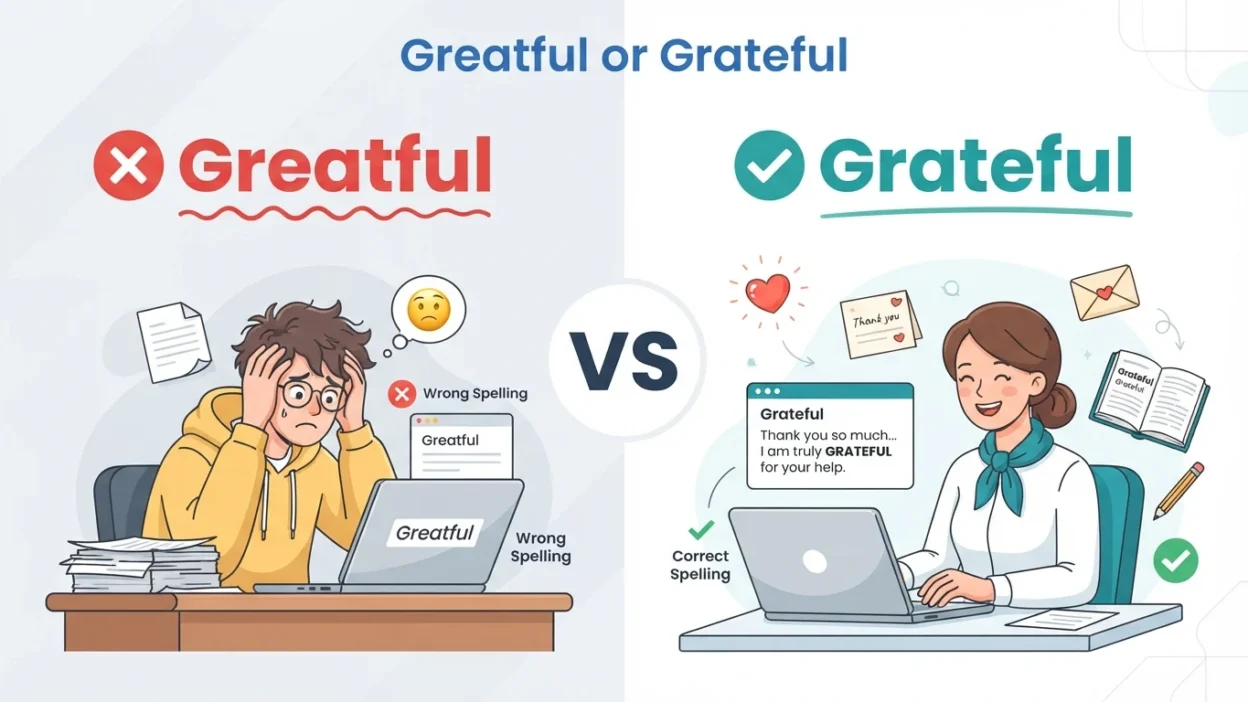
Learning greatful or grateful helps you avoid common spelling mistakes and write clear, professional English with confidence every day.
When emailing or writing an email, always send it after a spell check because spelling, grammar, and grammar mishaps can lead to incorrect spelling that weakens your English language skills. Paying attention to nouns, noun forms, adverbs, adverb placement, adjectives, and adjective choice helps you avoid common pitfalls that become a barrier to communicating like a professional.
From my experience working with sales teams, every sales professional knows the industry is always changing with new trends and evolving ways to connect. Anyone who interacts with people has plenty of room for error, but one timeless practice is sending a follow-up thank you note after a meeting with potential clients. It is one of the best ways of expressing gratitude, building networking relationships, showing genuine appreciation for someone’s time.
Before checking your final message, remember that a single mistake or repeated mistakes can leave the wrong impression. Whether your note is written by hand or sent digitally, careful proofreading remains important. I constantly see how this simple habit makes a large difference in professional communication.
Quick Answer
The correct spelling is grateful.
- ✅ Grateful means feeling thankful or appreciative for someone or something.
- ❌ Greatful is an incorrect spelling and is not recognized as a standard English word.
Examples:
- ✅ I am grateful for your support.
- ✅ She felt grateful after receiving the scholarship.
- ❌ I am greatful for your help.
If you want to express appreciation or thankfulness, always use grateful.
Is It Greatful or Grateful?
The confusion between greatful or grateful happens because many people assume the word comes from great. Since someone who is thankful may feel something “great,” the brain naturally connects the two.
However, grateful is not formed from the adjective great. Instead, it comes from the noun gratitude, which means thankfulness. That is why the correct spelling contains grat-, not great-.
Remember this simple rule:
Gratitude → Grateful
Not:
Great → Greatful
Once you connect grateful with gratitude, the spelling becomes much easier to remember.
What Does “Grateful” Mean?
Grateful is an adjective used to describe someone who feels thankful, appreciative, or sincerely pleased because of kindness, help, or good fortune.
People often use grateful when expressing thanks in both personal and professional communication.
Examples
- I am grateful for your kindness.
- We’re grateful for your continued support.
- She felt grateful after everyone helped her.
- They are grateful for the opportunity.
- I’m truly grateful to have such wonderful friends.
The word carries warmth, sincerity, and genuine appreciation.
Is “Greatful” a Real Word?
No.
Greatful is simply a misspelling of grateful.
It appears because English pronunciation can be misleading. Since great and grateful begin with similar sounds, many writers accidentally insert the extra e.
Modern dictionaries, grammar guides, and spell-check tools recognize only grateful as the correct spelling.
Whenever you write:
- emails
- essays
- business documents
- thank-you notes
- social media posts
always choose grateful.
Greatful vs Grateful Comparison
| Greatful | Grateful |
| Incorrect spelling | Correct spelling |
| Not found in standard dictionaries | Recognized English adjective |
| Should never be used in formal writing | Appropriate in all writing |
| Common spelling mistake | Standard spelling |
| Often confused with “great” | Comes from “gratitude” |
Why Do People Spell It “Greatful”?
Several reasons explain this mistake.
1. Similar Pronunciation
Both words begin with nearly the same sound.
2. Association with “Great”
People naturally connect feeling thankful with something great.
3. Fast Typing
Quick typing often causes writers to insert the extra e.
4. Lack of Proofreading
Without reviewing your writing, spelling mistakes can easily slip through.
Fortunately, once you remember gratitude, you’ll rarely make this mistake again.
Easy Trick to Remember the Correct Spelling
The easiest memory trick is:
Gratitude → Grateful
Both words begin with grat-.
Think:
- Gratitude
- Grateful
Never think:
- Great
- Greatful
This simple connection works surprisingly well.
Examples of “Grateful” in Sentences
Here are everyday examples.
Personal Life
- I’m grateful for everything you’ve done.
- She was grateful for the thoughtful gift.
- We are grateful to our parents.
Workplace
- Thank you for your feedback. I’m grateful for your guidance.
- The entire team is grateful for your leadership.
- We’re grateful for your continued partnership.
School
- Students were grateful for extra study time.
- I am grateful for my teacher’s encouragement.
Travel
- We’re grateful that our flight arrived safely.
- She felt grateful after meeting such kind people.
Common Mistakes to Avoid
Many writers make similar errors when using grateful.
Mistake 1: Writing “Greatful”
Incorrect:
- I am greatful.
Correct:
- I am grateful.
Mistake 2: Forgetting Spell Check
Always review important emails and professional documents before sending them.
Mistake 3: Confusing Gratitude and Greatness
Remember:
- Gratitude = Thankfulness
- Great = Excellent or large
They have different meanings.
Mistake 4: Capitalizing Randomly
Incorrect:
- I am Grateful.
Correct:
- I am grateful.
Unless the word begins a sentence, keep it lowercase.
Synonyms for Grateful
To improve your writing, you can sometimes replace grateful with similar words depending on the context.
Common synonyms include:
- Thankful
- Appreciative
- Obliged
- Indebted
- Blessed
- Acknowledging kindness
- Filled with gratitude
- Thankful-hearted
Each has a slightly different tone, but all express appreciation.
Grateful in Professional Communication
The word grateful is widely used in business emails and professional writing.
Examples:
- I’m grateful for your time.
- We’re grateful for your continued support.
- I sincerely appreciate your assistance.
- Thank you. I’m grateful for the opportunity.
These expressions sound polite, respectful, and professional.
American vs British English
There is no spelling difference between American and British English.
Both varieties use:
- ✅ Grateful
Neither uses:
- ❌ Greatful
The pronunciation may vary slightly depending on the accent, but the spelling remains identical worldwide.
Related Words and Phrases
Learning related vocabulary makes your English more natural.
Useful words include:
- Gratitude
- Appreciation
- Thankfulness
- Thankful
- Appreciation message
- Thank-you note
- Acknowledge
- Kindness
- Support
- Recognition
- Respect
- Sincere thanks
- Express gratitude
- Heartfelt appreciation
Using these naturally strengthens your vocabulary.
Expert Tips to Avoid the Mistake Forever
Here are simple habits that help:
- Connect grateful with gratitude.
- Let spell-check catch typing errors.
- Read your writing aloud before sending.
- Practice writing five example sentences.
- Notice the correct spelling in books and articles.
Small habits quickly become lifelong writing skills.
FAQs
Is “greatful” ever correct?
No. Greatful is always considered a misspelling in standard English.
Why do people confuse greatful and grateful?
Because great and grateful sound similar, many writers mistakenly add an extra e.
What does grateful mean?
It means feeling thankful, appreciative, or pleased because of kindness, help, or good fortune.
How do I remember the correct spelling?
Think of gratitude. Both gratitude and grateful begin with grat-.
Is grateful formal or informal?
It works in both formal and informal communication.
Can I use grateful in business emails?
Absolutely. It is one of the most professional and polite ways to express appreciation.
Does British English spell it differently?
No. Both British and American English use the spelling grateful.
Is grateful an adjective?
Yes. Grateful is an adjective describing a person’s feeling of thankfulness.
Summary
The debate over greatful or grateful has one clear answer: grateful is the only correct spelling. Although greatful looks believable because of its similarity to the word great, it is not accepted in standard English. The easiest way to remember the correct spelling is to connect it with gratitude, since both words share the same root.
Strong writing comes from mastering small details, and correct spelling is one of them. Whether you’re writing an email, a thank-you note, a social media post, or a business document, using grateful correctly shows professionalism, attention to detail, and respect for your reader.
Actionable Takeaway
Whenever you hesitate between greatful or grateful, pause and think of the word gratitude. If you’re expressing thanks or appreciation, the correct choice is always grateful. Save this rule, practice it in your daily writing, and you’ll never make this spelling mistake again.