Have you ever wondered whether “mom” or “mum” is the correct word for your mother? If you have seen both spellings in books, movies, messages, or online conversations, it is completely understandable to be unsure. The good news is that both “mom” and “mum” are correct—the main difference is where they are commonly used.
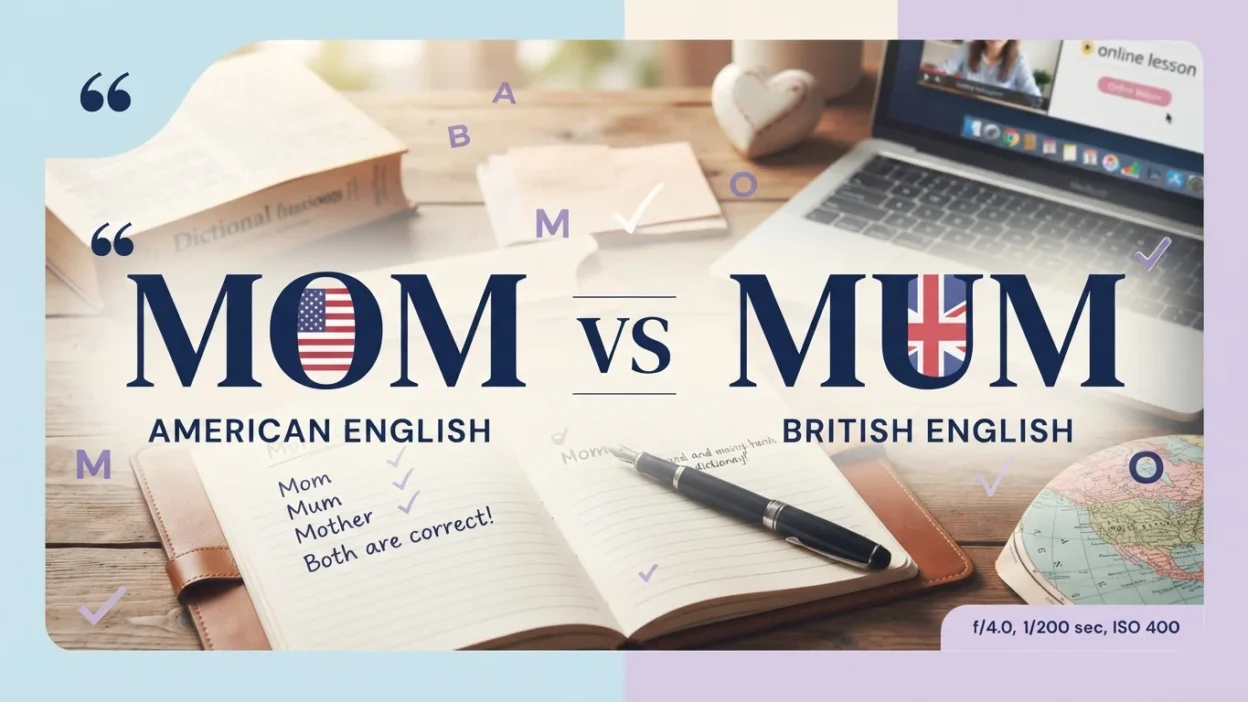
In general, “mom” is the preferred spelling in American English, while “mum” is commonly used in British English and several other varieties of English. Both words have the same basic meaning: a mother. The choice depends mainly on regional English and personal preference, not on grammar or correctness.
Quick Answer: Mom vs Mum
Mom and mum both mean “mother,” but they are associated with different varieties of English.
- Mom = commonly used in American English.
- Mum = commonly used in British English, Australian English, and some other varieties.
- Both are informal and affectionate terms for mother.
- Neither spelling is inherently more correct than the other.
Simple rule
American English → Mom
British English → Mum
Examples:
- US: My mom is coming to visit me.
- UK: My mum is coming to visit me.
The meaning is exactly the same.
What Does Mom Mean?
Mom is an informal word for mother. It is especially common in American English and is widely used by children and adults when referring to or addressing their mothers.
For many American speakers, “mom” is the natural everyday word rather than the more formal “mother.”
Examples of Mom in Sentences
- My mom makes the best cookies.
- I called my mom after work.
- My mom taught me how to cook.
- I’m going shopping with my mom this weekend.
- My mom always gives me helpful advice.
- I bought a birthday gift for my mom.
- My mom is proud of my achievements.
- I asked my mom for permission.
- My mom used to read bedtime stories to me.
- I love spending time with my mom.
In American English, “mom” sounds natural in everyday conversation, family messages, social media posts, and informal writing.
What Does Mum Mean?
Mum is an informal and affectionate word for mother. It is particularly common in British English and is also widely used in Australian English and other varieties influenced by British English.
Like “mom,” it can be used when directly addressing your mother or when talking about her.
Examples of Mum in Sentences
- My mum is making dinner tonight.
- I called my mum this morning.
- My mum gave me some great advice.
- I’m going to visit my mum this weekend.
- My mum loves gardening.
- I bought flowers for my mum.
- My mum helped me with my homework.
- I told my mum about my new job.
- My mum always encourages me.
- I spent the afternoon with my mum.
For British speakers, “mum” is the ordinary, natural equivalent of American “mom.”
Mom vs Mum: Comparison Table
| Feature | Mom | Mum |
| Meaning | Mother | Mother |
| Common variety | American English | British English |
| Also used in | Canadian English and some other varieties | Australian English and other British-influenced varieties |
| Tone | Informal, affectionate | Informal, affectionate |
| Pronunciation | Usually /mɑːm/ in American English | Usually /mʌm/ in British English |
| Formal equivalent | Mother | Mother |
| Example | My mom is here. | My mum is here. |
| Correct spelling? | Yes | Yes |
The important thing is that mom and mum are regional variants, much like other spelling differences between varieties of English.
Is Mom American or British?
“Mom” is primarily associated with American English.
It is the standard everyday term for mother in the United States. It is also used by some Canadian English speakers, although “mum” can also be found in Canada depending on the speaker and region.
For example:
My mom is picking me up from school.
This sentence sounds completely natural in American English.
American movies, television shows, books, and social media frequently use “mom,” which has also made the spelling familiar to English learners around the world.
Is Mum British or American?
“Mum” is primarily associated with British English.
It is commonly used in the United Kingdom and is also widely used in Australia and other English-speaking communities influenced by British English.
For example:
My mum is picking me up from school.
This sounds completely natural in British English.
If you are writing specifically for a British audience, “mum” will generally sound more natural than “mom.”
Mom vs Mum in American and British English
The difference between “mom” and “mum” is mainly geographical.
American English
American speakers generally use:
- Mom
- My mom
- Mom’s car
- Mom and Dad
- My friend’s mom
Example:
My mom is a doctor.
British English
British speakers generally use:
- Mum
- My mum
- Mum’s car
- Mum and Dad
- My friend’s mum
Example:
My mum is a doctor.
Both sentences communicate exactly the same idea.
What About Mommy and Mummy?
The same regional difference appears in longer, more affectionate forms.
American English: Mommy
Mommy is commonly used by young children in American English.
Example:
Mommy, can you help me?
British English: Mummy
Mummy is commonly used by young children in British English.
Example:
Mummy, can you read me a story?
As children grow older, they often move toward “mom” or “mum,” although family preferences vary.
There are also affectionate forms such as:
- Momma
- Mama
- Mumma
- Mam
These forms vary by region, family, culture, and personal preference.
Is Mom More Correct Than Mum?
No. Neither is universally more correct.
The appropriate choice depends on the variety of English you are using.
If you are writing American English, mom is generally the natural choice.
If you are writing British English, mum is generally the natural choice.
Think of it like this:
Mom = American English
Mum = British English
Neither spelling is a grammatical error simply because it comes from a different variety of English.
Mom vs Mum in Formal Writing
“Mom” and “mum” are both informal terms.
In formal writing, mother is generally more appropriate.
For example:
Informal:
My mom helped me complete the application.
More formal:
My mother helped me complete the application.
British English:
My mum helped me complete the application.
The choice depends on the level of formality and the relationship you want the writing to convey.
Use mother when you need a neutral or formal tone, and mom/mum when a personal, conversational tone is appropriate.
Common Mistakes With Mom and Mum
Mistake 1: Thinking One Spelling Is Wrong
A common misconception is that either “mom” or “mum” must be incorrect.
That is not true.
Both are standard English words. They simply belong to different regional varieties.
Mistake 2: Mixing American and British English
Mixing varieties is not always a serious problem, but consistency can make your writing look more polished.
For example, if you are writing an article entirely in British English, using “mum” alongside other British vocabulary may sound more natural.
Likewise, American English content will generally use “mom.”
Mistake 3: Using Mum When Writing Specifically for an American Audience
“Mum” is understandable to most American readers, but mom is more natural in standard American usage.
Mistake 4: Assuming Mum Only Means Mother
“Mum” has another meaning in British English: it can refer to a chrysanthemum, a type of flowering plant.
For example:
She planted colorful mums in her garden.
This meaning is normally clear from context.
In the phrase “my mum,” however, it means “my mother.”
Mistake 5: Confusing Mum With “Mum’s the Word”
“Mum” can also appear in the expression “mum’s the word,” meaning that something should be kept secret.
For example:
Mum’s the word about the surprise party.
Here, “mum” is not referring to someone’s mother.
Mom vs Mum Pronunciation
There can also be a slight pronunciation difference.
In many varieties of American English, mom is pronounced approximately /mɑːm/.
In standard British English, mum is generally pronounced approximately /mʌm/.
The vowel sound is different, but both words are used in the same basic way.
English pronunciation varies by region, so individual accents may differ.
Synonyms and Related Words for Mom and Mum
If you want alternatives, several words can refer to a mother or maternal figure.
Common alternatives
- Mother
- Mama
- Momma
- Mummy
- Mommy
- Ma
- Mumma
- Mam
The appropriate term depends heavily on region, age, family tradition, and tone.
For example, mother is neutral and formal, while mommy and mummy often sound more childlike or affectionate.
Mom vs Mum in Different English-Speaking Countries
The most common patterns are:
| Country/Region | Common Term |
| United States | Mom |
| United Kingdom | Mum |
| Australia | Mum |
| New Zealand | Mum |
| Canada | Mom and Mum both occur |
| Ireland | Mum is common |
| South Africa | Mum is commonly used |
These are broad usage patterns rather than absolute rules. Individual speakers and families may use a different form.
How to Remember Mom vs Mum
The easiest memory trick is to associate each word with its main variety of English:
Mom → American English 🇺🇸
Mum → British English 🇬🇧
You can also remember:
Mom has “o” → USA
Mum has “u” → UK
This is only a memory aid, not a spelling rule, but it can make the distinction easier to remember.
FAQs
1. Is it mom or mum?
Both are correct. Mom is primarily used in American English, while mum is primarily used in British English and is also common in Australian and New Zealand English.
2. Is mum British or American?
“Mum” is primarily associated with British English. It is also widely used in Australia, New Zealand, Ireland, and other regions.
3. Is mom American English?
Yes. “Mom” is the standard informal word for mother in American English.
4. Are mom and mum the same thing?
Yes. In the context of family relationships, both words mean mother. The main difference is regional usage and pronunciation.
5. Which is more formal, mom or mum?
Neither is particularly formal. Both are informal terms. Mother is the more formal or neutral alternative.
6. Do Australians say mom or mum?
Australians generally use mum, following the British English pattern.
7. Can I use mum in American English?
You can, and American readers will generally understand it, but mom is the more natural standard choice in American English.
8. What is the difference between mommy and mummy?
“Mommy” is commonly associated with American English, while “mummy” is commonly associated with British English. Both are affectionate terms for mother, especially when used by children.
Summary: Mom vs Mum
The difference between mom vs mum is primarily a matter of regional English, not correctness. Both words mean “mother” and are informal, affectionate terms used in everyday family conversations. Mom is most strongly associated with American English, while mum is most strongly associated with British English and is also common in countries such as Australia and New Zealand. The formal equivalent of both words is mother.
When choosing between them, consider your audience and the variety of English you are using. If you are writing American English, choose mom. If you are writing British English, choose mum. Neither spelling is wrong, and neither is universally better. Actionable takeaway: Remember Mom = American English and Mum = British English, while mother works as the neutral formal term in both.